The cream

Non-dairy creamer

Non-dairy creamer is the second of nine ingredients on the Joe's Blend box, printed as 'Non-dairy creamer (Glucose syrup solids, vegetable palm oil, emulsifier, silicon dioxide)'. It makes the cup creamy without milk, and none of its four parts is a dairy ingredient on the label.

Ingredient 2 of 9No milk on the labelFat 98% saturated

Source for this section: the printed Joe's Blend box, batches 140525JCA3 and 140525JCA7.

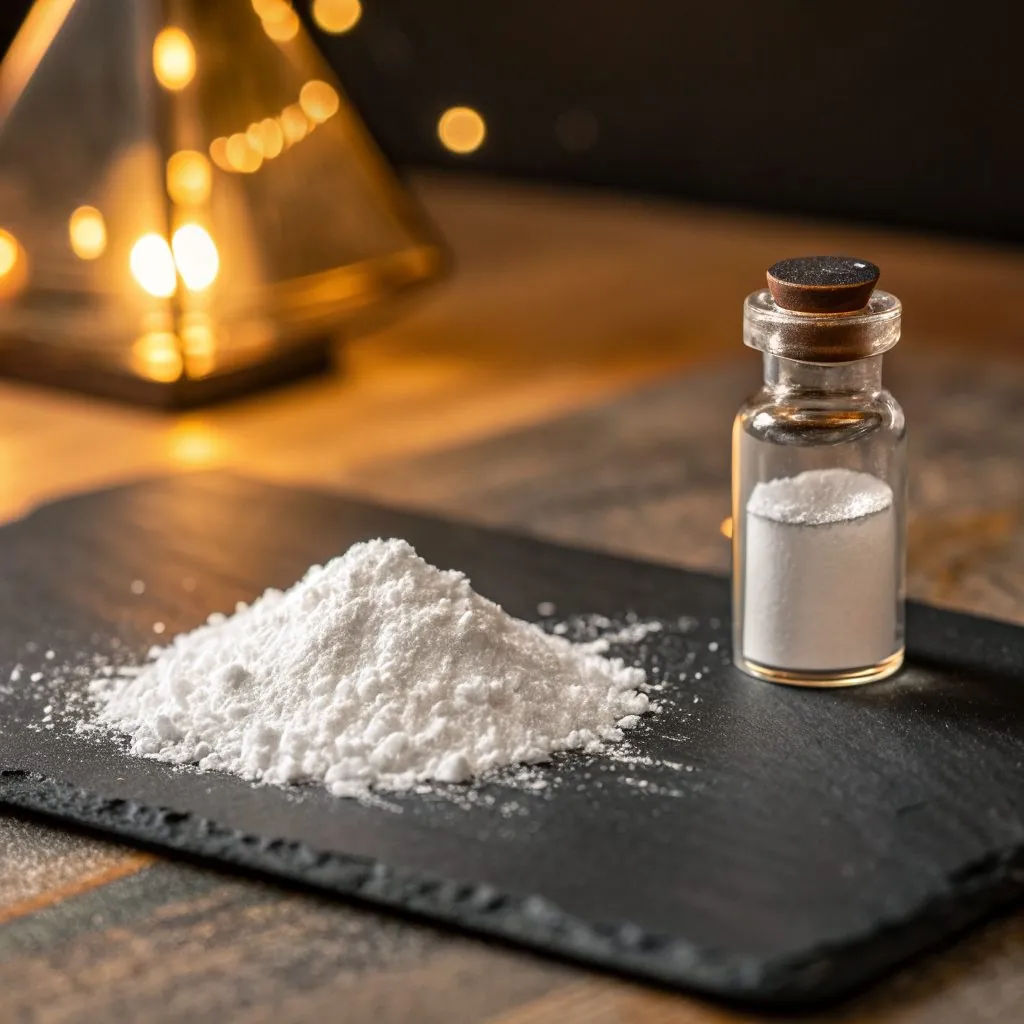
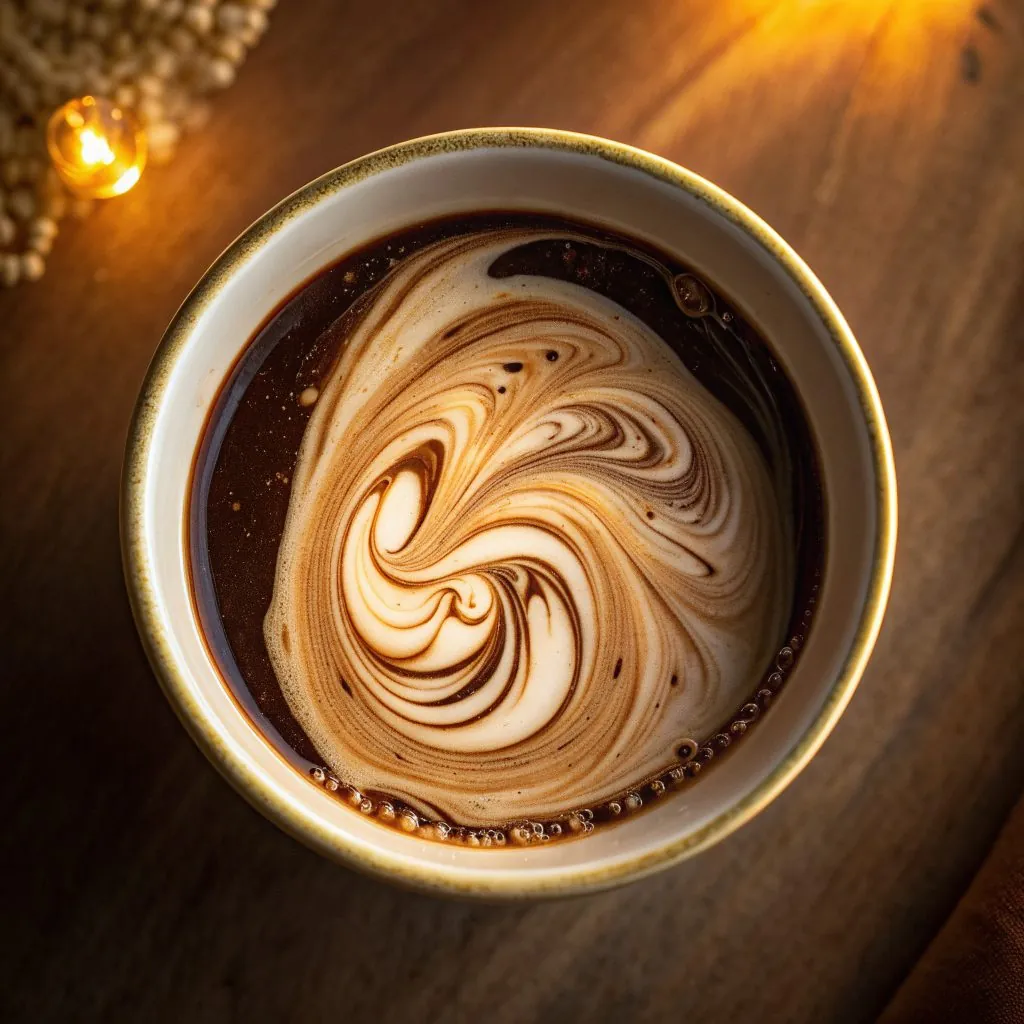
Creamer powder and a cup of creamy coffeeIn every 21 g sachet

Real milk vs creamer: what is different?

Milk is a dairy food that carries lactose, milk protein and milk fat: per 100 g, USDA data list whole milk at 61 kcal, 3.15 g of protein, 3.25 g of fat and 5.05 g of lactose. A non-dairy creamer does milk's job in coffee, whitening and texture, as a dry powder instead. Food scientists describe these creamers as spray-dried oil-in-water emulsion powders.

The biggest difference in Joe's Blend is what the label leaves out. Its creamer lists glucose syrup solids, vegetable palm oil, an emulsifier and silicon dioxide. The Codex labelling standard names 'milk and milk products (lactose included)' among the allergens that must always be declared, and none appears anywhere in the nine ingredients. Creamer research also centres on replacing sodium caseinate with plant proteins; no caseinate is listed here either.

Real milk vs creamer: what is different?
Whole milk, per 100 gJoe's Blend, one 21 g sachet
Energy61 kcal91.60 kcal, rounded to 92
Protein3.15 g1.02 g
Fat3.25 g, of which 1.86 g saturated2.65 g, of which 2.60 g saturated
Sugars5.05 g lactose10.37 g total sugars; no lactose on the label
Where the fat comes fromMilk fatVegetable palm oil, the only oil named on the label

Two figures we worked out from those numbers: in whole milk, 57 percent of the fat is saturated (1.86 of 3.25 g); in a Joe's Blend sachet it is 98 percent (2.60 of 2.65 g). The WHO lists palm oil with butter, cream and coconut oil as sources of saturated fat. The two columns are different servings, so read them side by side, not as a swap.

Sources for this section: USDA FoodData Central, whole milk, FDC ID 171265; Liu and colleagues, Food chemistry: X, 2023, PMID 37780246; Wang and colleagues, Food chemistry: X, 2026, PMID 42358314; the printed Joe's Blend box, batches 140525JCA3 and 140525JCA7; Codex Alimentarius labelling standard CODEX STAN 1-1985, FAO and WHO; Eurofins nutrient report AR-25-E9-005753-01; World Health Organization, Healthy diet fact sheet.
What is in the Joe's Blend non-dairy creamer?

A compound ingredient's parts are listed in brackets from the largest share to the smallest, so by the box's own order the largest part of the creamer is glucose syrup solids, then palm oil:

  • Glucose syrup solids: glucose syrup dried to a powder and, by the label's order, the largest part of the creamer. Any sugars it carries are inside the 10.37 g of total sugars the lab measured for a whole sachet.
  • Vegetable palm oil: the only oil or fat named on the whole label. It is the most likely source of the sachet's 2.65 g of fat, since nothing else on the list is a fat.
  • Emulsifier: holds oil droplets in an emulsion, which a creamer powder needs to stay stable. The label does not name which emulsifier, so its source is not known from the box.
  • Silicon dioxide (silica): listed inside the creamer and again as the ninth ingredient of the whole mix, so it appears on the label twice. The box does not say what it does in this mix.

Sources for this section: Codex Alimentarius labelling standard CODEX STAN 1-1985, FAO and WHO; Eurofins nutrient report AR-25-E9-005753-01; the printed Joe's Blend box, batches 140525JCA3 and 140525JCA7; Wang and colleagues, Food chemistry: X, 2026, PMID 42358314.

Does Joe's Blend contain dairy?

No dairy ingredient is printed on the Joe's Blend box: no milk, cream, butter, whey, lactose or caseinate, in the creamer or anywhere else in the nine ingredients. The allergen note on our facts page names soy, from the soybean seed extract, and nothing else.

Two things the label cannot settle: the emulsifier is not named, and the box does not say whether the creamer is made on equipment shared with milk products. We have not seen the creamer supplier's specification sheet, so this page does not call Joe's Blend dairy free or lactose free.

Source for this section: the printed Joe's Blend box, batches 140525JCA3 and 140525JCA7.

What the creamer adds to a sachet, in numbers

Eurofins measured one 21 g sachet at 91.60 kcal, with 23.81 of those calories from fat, which is 26 percent. Fat is 2.65 g, 2.60 g of it saturated, with 0 g of trans fat and no cholesterol. Total sugars are 10.37 g and protein is 1.02 g. Rounded the way a nutrition panel prints them, that is 92 kcal, 3 g fat, 10 g sugars and 1 g protein.

The trans fat line matters for creamers. Creamers have been made with partially hydrogenated oil, a source of trans fatty acids, and researchers developing new creamer fats name avoiding it as their reason. The Joe's Blend lab report lists 0 g of trans fat per sachet.

The report does not split its figures by ingredient, so the fat and sugar belong to the whole sachet, not to the creamer alone.

Sources for this section: Eurofins nutrient report AR-25-E9-005753-01; Liu and colleagues, Food chemistry: X, 2023, PMID 37780246.

The research

What have food scientists measured in non-dairy creamers?

Two recent papers on how creamers are built, summarised by what they measured.

Plant-protein non-dairy creamers: A comprehensive review of structural modifications and processing innovations for improved performance.

Wang X, Chen B, Yan C. Food chemistry: X, 2026.

A review of creamers stabilised with plant proteins instead of sodium caseinate. It describes creamers as spray-dried oil-in-water emulsion powders that must wet quickly, whiten, stay stable and taste acceptable, and weighs how protein source and processing change those results.

PubMed 42358314 →

Physicochemical properties and feasibility of coconut oil-based diacylglycerol as an alternative fat for healthy non-dairy creamer.

Liu X, Xu W, Wang W. Food chemistry: X, 2023.

Tested a coconut oil based fat (diacylglycerol) as a creamer fat that avoids the trans fats of partially hydrogenated oil. The test creamers held their fat about as well as commercial ones and measured whiter in black coffee.

PubMed 37780246 →

Education, not advice. Joe's Blend is coffee, not medicine, and carries no approved therapeutic claims. If you have a condition or take medication, talk to your doctor before adding anything new to your day.

Sources for this section: Wang and colleagues, Food chemistry: X, 2026, PMID 42358314; Liu and colleagues, Food chemistry: X, 2023, PMID 37780246.

FAQ

Non-dairy creamer questions, answered from the label

What is non-dairy creamer made of?

In Joe's Blend it is glucose syrup solids, vegetable palm oil, an emulsifier and silicon dioxide, listed in that order on the box.

Is non-dairy creamer the same as milk?

No. Whole milk carries lactose, milk protein and milk fat. The Joe's Blend creamer lists no milk ingredient; its fat is palm oil, and glucose syrup solids are listed first inside it.

Does Joe's Blend contain milk?

No milk ingredient is printed on the box. The emulsifier is not named on the label, so we do not call the product dairy free.

Does the creamer have trans fat?

The Eurofins analysis measured 0 g of trans fat per 21 g sachet. It measured 2.65 g of fat in total, 2.60 g of it saturated.

How many calories does the creamer add?

The lab measured the whole sachet, not the creamer alone: 92 kcal per 21 g, 24 of them from fat.

Sources

  1. Joe's Blend Coffee box: printed ingredient list, directions and storage line, batches 140525JCA3 and 140525JCA7 (manufactured 14 May 2025, expiry 14 May 2027). Read from photographs of two boxes, 16 September 2026. The list is reproduced on our facts page. joesblend.com/facts
  2. USDA FoodData Central: Milk, whole, 3.25% milkfat, with added vitamin D (FDC ID 171265, SR Legacy), values per 100 g. Retrieved through the FoodData Central API, 29 September 2026. fdc.nal.usda.gov
  3. Liu X, Xu W, Wang W. Physicochemical properties and feasibility of coconut oil-based diacylglycerol as an alternative fat for healthy non-dairy creamer. Food chemistry: X, 2023. PMID 37780246
  4. Wang X, Chen B, Yan C. Plant-protein non-dairy creamers: A comprehensive review of structural modifications and processing innovations for improved performance. Food chemistry: X, 2026. PMID 42358314
  5. Codex Alimentarius: General Standard for the Labelling of Prepackaged Foods, CODEX STAN 1-1985 (Rev. 1-1991), sections 4.2.1.2 to 4.2.1.4, the text hosted by FAO. FAO and WHO. Read 30 September 2026. fao.org
  6. Eurofins Analytical and Assurance Services Philippines, Quezon City: nutrient report AR-25-E9-005753-01 (964-2025-00005149) for Joe's Blend Coffee, results per 100 g and per 21 g serving, actual and rounded. The rounded values are on our facts page. joesblend.com/facts
  7. World Health Organization: Healthy diet, fact sheet (sugars and fats sections). Read 29 September 2026. who.int
One box of Joe's Blend Coffee, 10 sachets
Try it in the cup

One box. Ten mornings.

Arabica with L-theanine, L-glutathione and L-carnitine, in a 21 g sachet. Hot or iced, 30 seconds.

₱54910 sachets · ₱54.90 a cup · shipping included
Explore

The other ingredients